

Artificial intelligence is changing the way wellness brands create content, connect with audiences, and get discovered online. As tools like ChatGPT and AI-powered search become more common, brands have new opportunities to work more efficiently, strengthen their marketing strategy, and improve visibility across search and digital platforms. What used to take hours of brainstorming, outlining, and planning can now be streamlined in a way that helps teams move faster and stay more consistent.
At the same time, wellness marketing is built on trust, clarity, and genuine connection. People are not just looking for products or services. They are looking for brands that feel credible, thoughtful, and aligned with their values. That is why AI works best when it supports your brand voice and content strategy rather than replacing the human insight behind it. When used well, it can help wellness brands create stronger content, answer customer questions more clearly, and stay visible in a fast-changing digital landscape.
In this post, we’re breaking down how AI is impacting wellness marketing strategies, how brands can actually use tools like ChatGPT well, and what “AI discoverability” means for the future of SEO and content visibility.
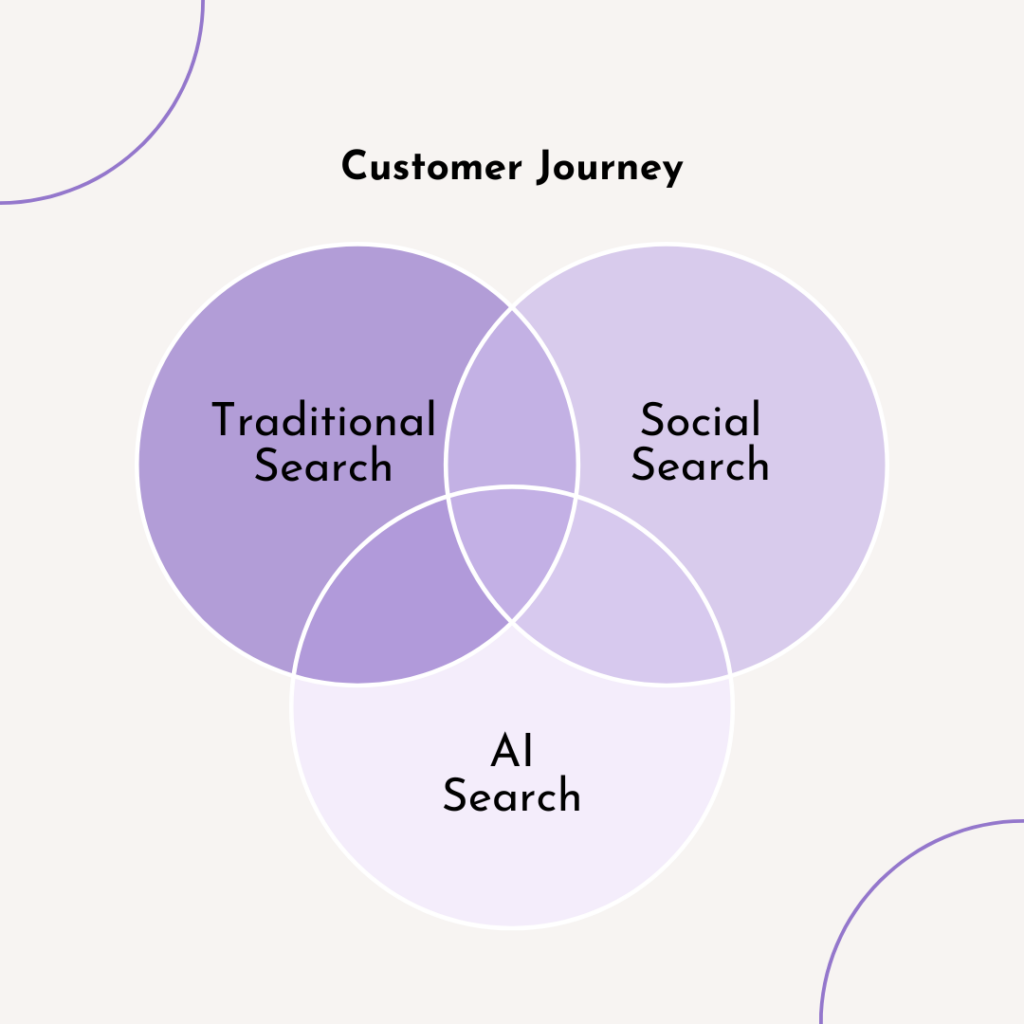
AI Is Changing How People Discover Wellness Brands
The customer journey is becoming less linear. A few years ago, a customer might discover a wellness brand through Instagram, search Google, read a blog post, and then make a purchase. Today, that same person may ask ChatGPT for the best magnesium supplements for sleep, use Google’s AI features to compare options, search TikTok for product reviews, and only then visit a wellness brand’s website.
That means discoverability now extends beyond just ranking for a short keyword. Wellness brands need to think about whether their content is structured and useful enough to be surfaced in:
- Traditional search results
- AI-powered search experiences
- Conversational search tools like ChatGPT
- Social search behavior across Instagram, TikTok, Pinterest, and YouTube
This matters because wellness consumers are often searching with high intent and high specificity. They are not just typing “best wellness brand.” They are asking more detailed, trust-based questions. Brands that create content around real consumer questions are better positioned to show up in those moments.
How AI Is Impacting Wellness Marketing Strategies
1. Faster strategy and content planning
AI can help marketers speed up research, identify content themes, summarize audience pain points, and map content ideas to different stages of the funnel. This is especially useful for lean wellness teams that need to do more with less.
For example, a wellness brand can use AI to:
- Brainstorm blog topics based on common customer questions
- Generate first-draft social captions
- Organize educational content pillars
- Repurpose one long-form blog into email, social, and video talking points
- Surface recurring themes from reviews or customer feedback
2. Smarter SEO and topic coverage
AI is making it easier to build topical depth rather than relying on isolated keywords. Brands can use it to identify related questions, cluster content by theme, and develop stronger educational ecosystems on their site.
That is especially valuable for wellness brands because many purchases require education first. Customers often need to understand the why before they buy.
3. More efficient personalization
Used thoughtfully, AI can help tailor messaging to different audience segments.
4. Increased content competition
Because everyone can produce more content faster, average content quality is at risk of dropping. For wellness brands, this means AI should improve your process, not replace your thinking.
Where ChatGPT Can Actually Help Wellness Brands
ChatGPT can be a valuable tool for wellness brands when it is used to support strategy rather than replace it. It is especially helpful for brainstorming blog topics, organizing content ideas, repurposing existing materials, refining messaging, and speeding up early drafts.
It can also help teams think more clearly about SEO by generating title ideas, FAQs, content outlines, and related topic variations. For wellness brands that need to educate their audience, this can be useful when planning content around routines, ingredients, customer questions, or seasonal campaigns.
What matters most is how it is used. ChatGPT works best as a starting point or support tool, not as a final authority. In a trust-based industry like wellness, every piece of content still benefits from human insight, brand context, and careful review.
How Wellness Brands Should Not Use AI
AI can be incredibly useful, but using it the wrong way can quickly flatten your brand voice and weaken trust. That is especially important in wellness, where your audience often seeks credibility, alignment, and a genuine sense of connection.
The biggest mistake brands make is publishing content that feels generic just because it was fast to create. If your blog sounds like everyone else’s, it becomes much harder to stand out. AI can support your process, but it should not replace your point of view, your understanding of your customers, or your editorial standards.
For wellness brands, human review still matters at every stage. Content should be checked for brand voice, clarity, accuracy, SEO value, and any claims that may need extra care. The goal is not to produce more content for the sake of volume. The goal is to create content that is thoughtful, useful, and trusted.
What AI Discoverability Means for Wellness Brands
AI discoverability is the idea that your brand and content can be found, cited, referenced, or summarized in AI-powered experiences, not just in traditional search results.
For wellness brands, AI discoverability is not a separate strategy from SEO. It is an evolution of it.
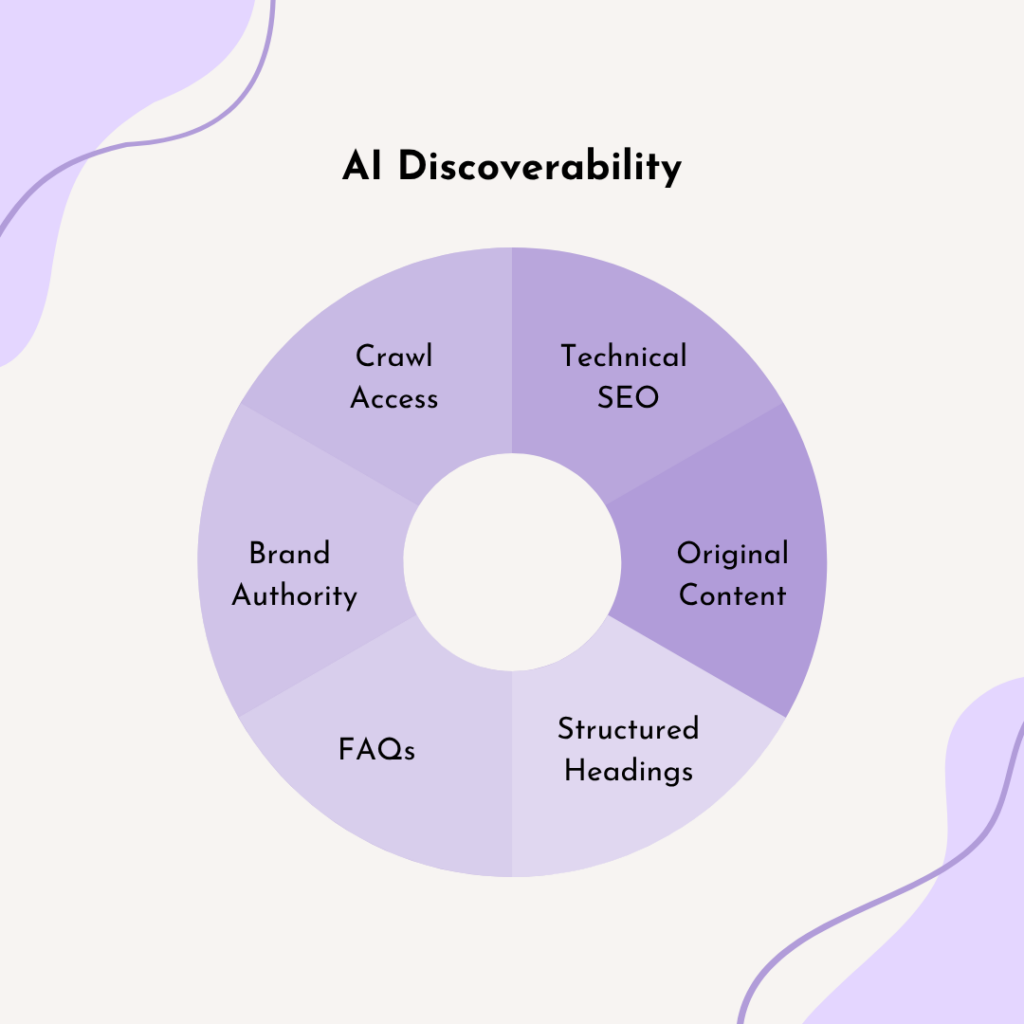
The real question becomes: is your content clear, original, well-structured, and useful enough for both humans and AI systems to understand and trust?
How Wellness Brands Can Improve AI Discoverability
The best way to improve AI discoverability is to create content around the real questions your audience is already asking. Wellness consumers are often looking for clarity before they buy, so content that explains, educates, and answers specific concerns is often the most valuable.
It also helps to make your content easy to follow. Clear headings, useful subtopics, short paragraphs, and direct answers make a blog more readable for people and easier for search systems to interpret. Just as importantly, your content should include original insight. Founder perspective, customer patterns, campaign takeaways, and real brand experience are what make content more memorable and more credible.
Rather than focusing on isolated posts, wellness brands should think in terms of a connected content ecosystem. When your blog posts support one another through internal linking and related topics, your site becomes stronger overall. AI can help optimize and organize that process, but the value still comes from your brand’s actual expertise and understanding of the audience.
A Simple AI Content Workflow for Wellness Brands
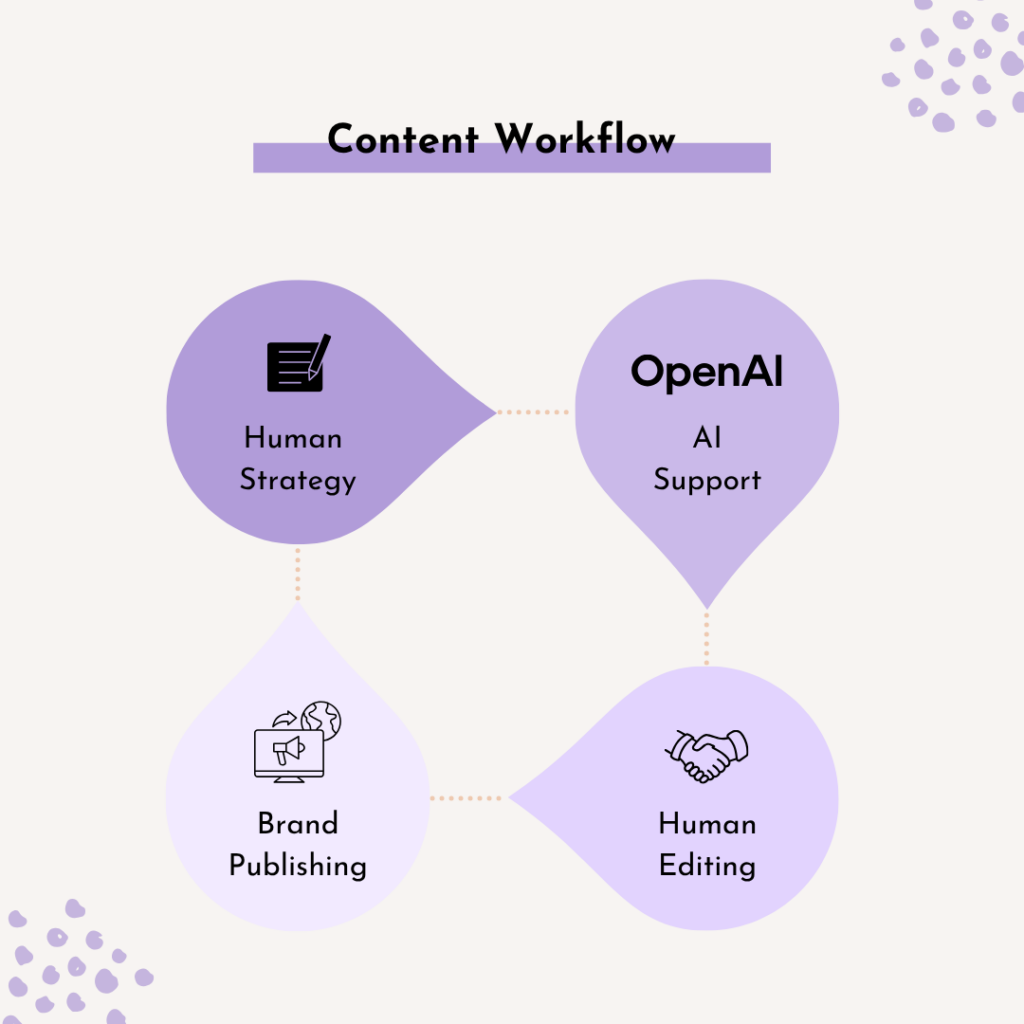
A strong AI workflow starts with a human strategy. Before using any tool, brands need clarity on their audience, messaging, goals, and search intent. Once that foundation is in place, AI can help support brainstorming, outlining, repurposing, and organizing ideas more efficiently.
From there, the most important step is adding real input. Founder perspective, customer insights, practitioner knowledge, and campaign learnings are what turn a basic draft into something more useful and aligned. AI can speed up production, but it cannot replace context.
The final step is refining the content for voice, trust, and quality, then publishing it as part of a broader marketing ecosystem. A strong blog can become social content, email content, short-form video talking points, and more. That is where AI becomes most helpful: not as a shortcut, but as a tool that helps strong ideas go further.
Why Human-Centered Brands Will Win in an AI-Heavy Market
AI can help brands move faster, but it cannot replace the emotional intelligence, nuance, and trust that strong wellness brands are built on.
In fact, as more content becomes AI-assisted, the brands that stand out will likely be the ones that feel the most grounded, specific, and human. The future is not human or AI. It is human-led, AI-supported marketing.
For wellness brands, that is good news.
Conclusion
AI is already changing wellness marketing. It is changing how teams create content, how customers search, and how brands are discovered across search engines and AI-powered experiences.
For wellness brands, the takeaway is not to chase every AI tool or publish more content just because you can. The real opportunity is to use AI to become more strategic, more efficient, and more discoverable, while keeping your content rooted in original thinking and genuine trust.
The brands that will benefit most from AI are not the ones using it to sound louder. They are the ones using it to communicate more clearly, answer real questions better, and create content ecosystems that truly serve their audience.